Notes from the shop · Process
How Long a Fleet Wrap Takes: From Inquiry to Install
A fleet wrap moves through inquiry, scoping, design, print, prep and install. Here is what happens at each stage, what takes time, and how to shorten it.
· 8 min read · NYC Car Wraps, Long Island City
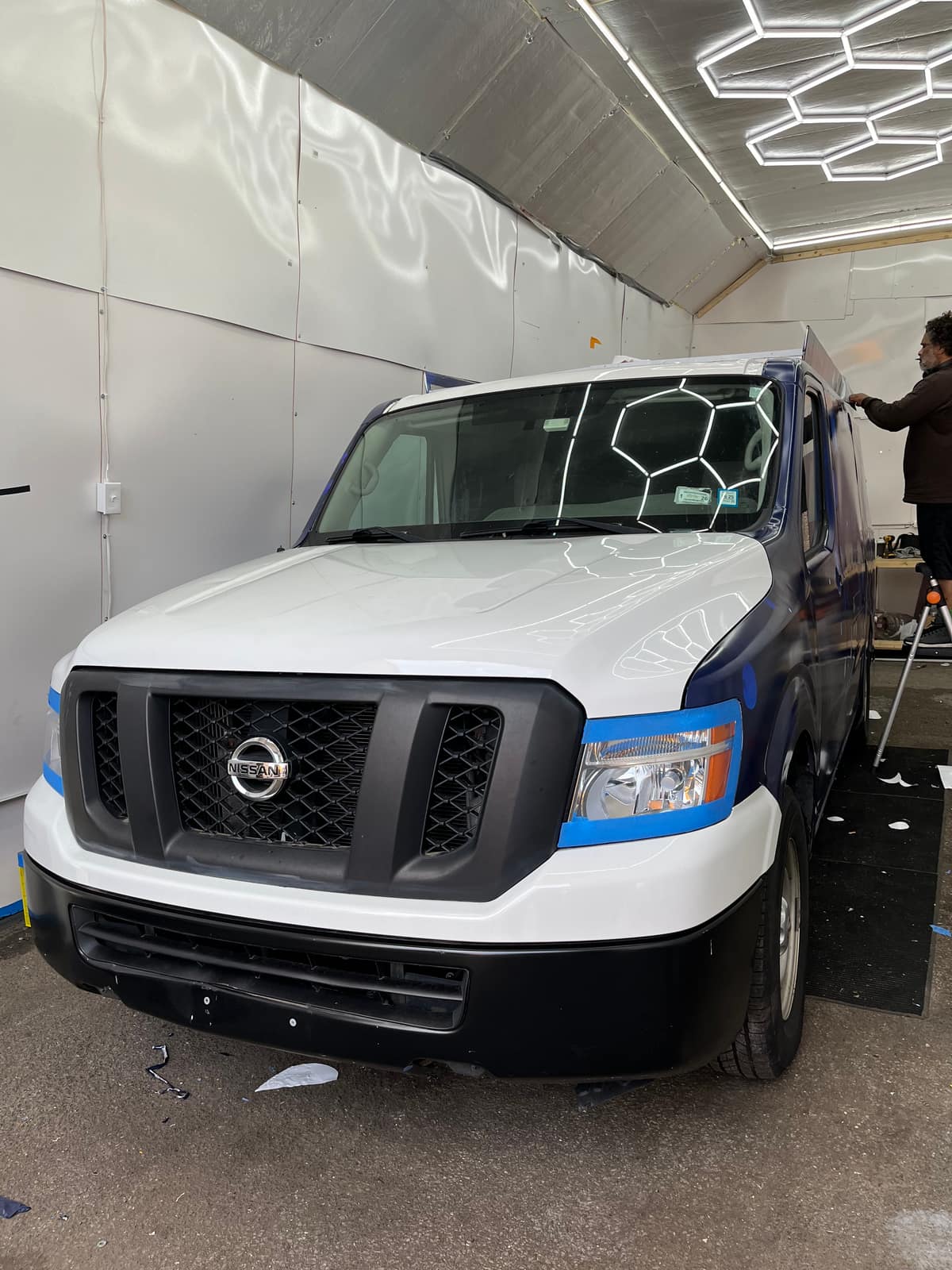
The second question fleet managers ask, right after cost, is how long the whole thing takes. The honest answer is that install is the shortest part. Most of the calendar goes to the steps before a vehicle enters the bay: gathering details, locking artwork, printing and letting laminate cure. This post walks through each stage, what usually takes time, and where you can pull days out of the schedule. Every job is scoped individually, so treat the ranges here as typical rather than promised.
1. Inquiry and site details
The clock starts when you reach out, and the first few days depend almost entirely on what arrives with the inquiry. We ask for a vehicle list with year, make, model, roof height or box length, and how many of each. We ask where the vehicles are parked, whether they can come to Long Island City or need on-site work, and when they can come off the road. We ask what artwork exists and in what format. Phone photos of one vehicle from each side are enough for a first pass.
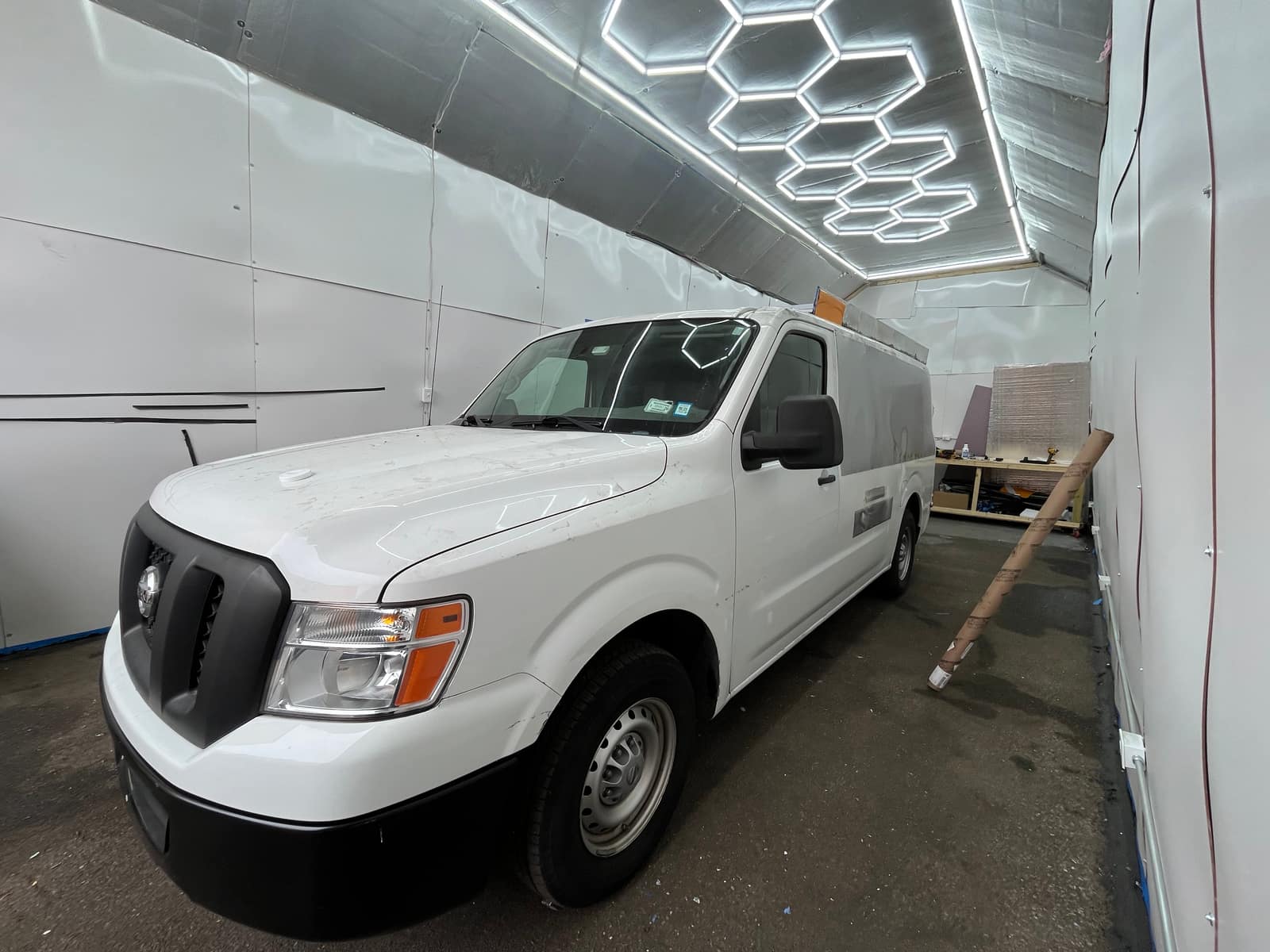
A complete vehicle list shortens everything that follows. It lets us pull the right templates, estimate film by the roll, and build an install rotation in the same reply as the quote. A list that says "a few vans and a truck" turns into a round of questions, and each round costs a day or two.
2. Scoping and quote
With the list in hand we scope the job: coverage per vehicle, what has to come off and go back on, whether old graphics need removal, and whether the paint will hold film. For larger fleets or on-site work we may visit the yard first. A scoped quote normally goes back within a few business days of a complete inquiry. Approval on your side is the part we cannot speed up, so it helps to know who signs before the quote lands.
3. Design and template
Every layout is built on a template of the exact vehicle. For common vans, box trucks and pickups the manufacturer templates exist and we start from them the same day. For older vehicles, custom bodies, step vans and buses we photograph and measure the vehicle ourselves and draw the template from that. It adds a day or two but means the print fits rivets, seams and door lines instead of guessing at them.
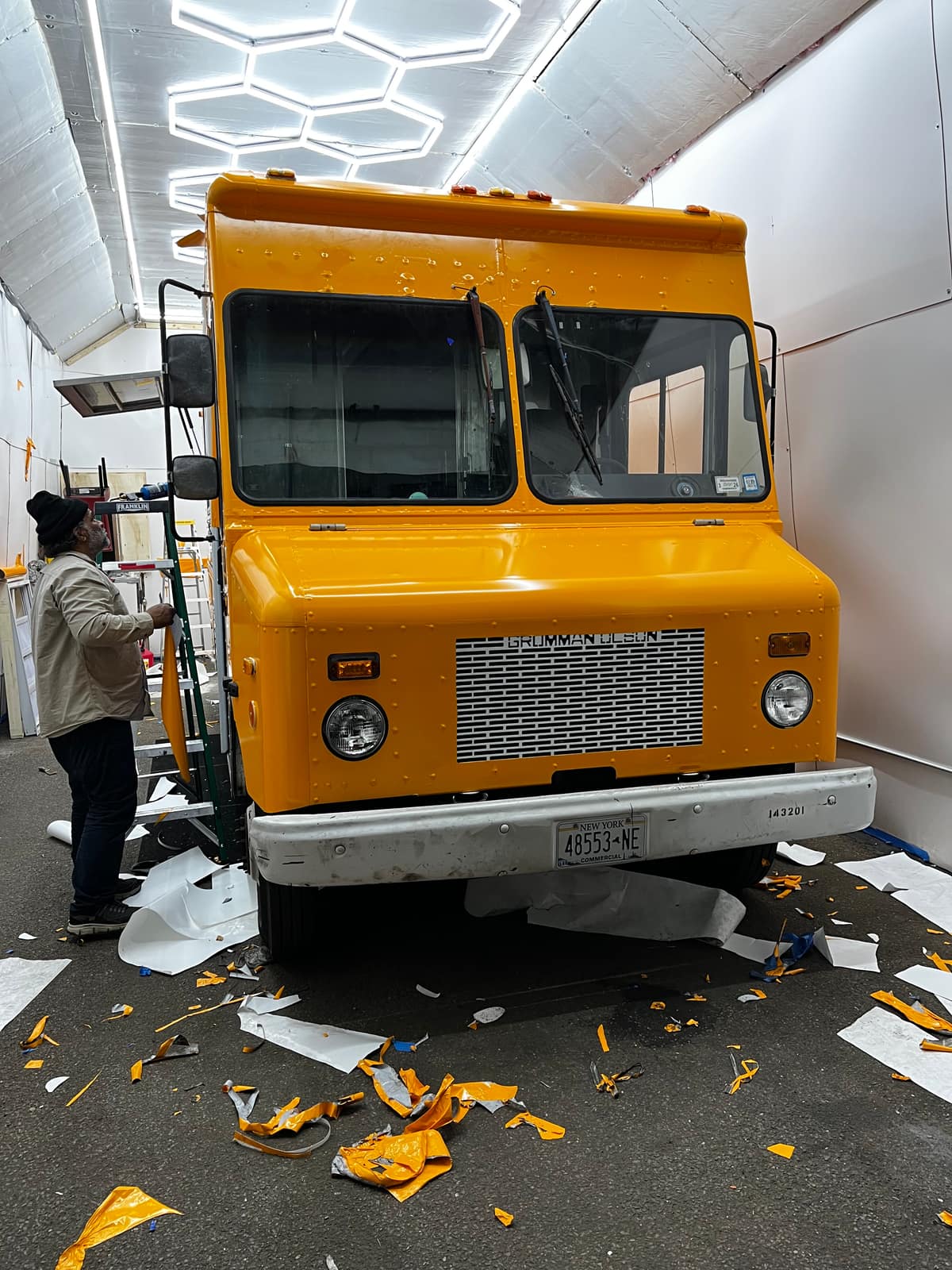
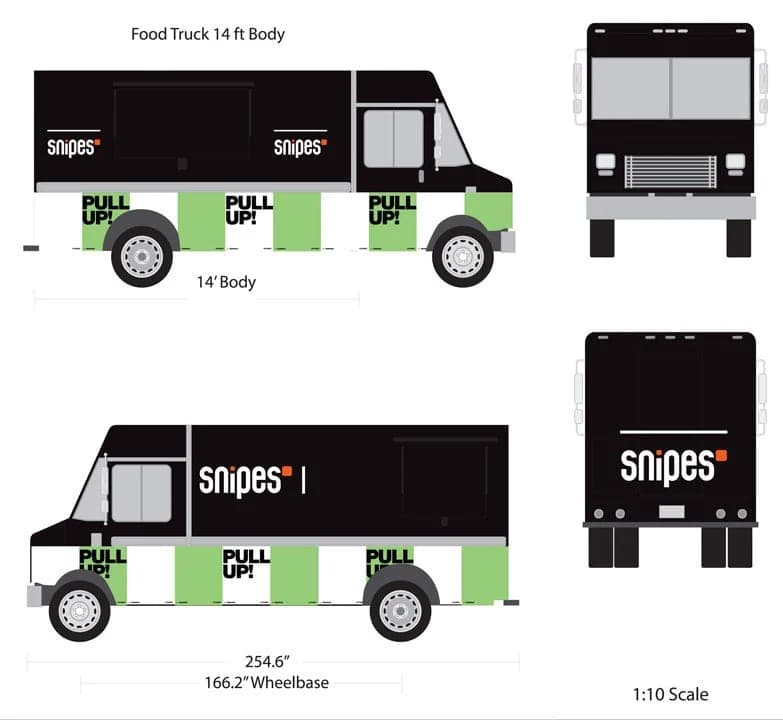
The first proof usually follows within a few business days if we have vector artwork and brand colors. If we are rebuilding a logo from a screenshot, that comes first. Then revisions. Each round takes a day or two on our side and however long it takes on yours, and this is where fleet timelines are won or lost. Two rounds with one decision-maker is quick. Five rounds with three people reviewing separately can add weeks. Locking artwork early, with one person able to approve it, is the single biggest schedule lever in the process.
4. Print and lamination
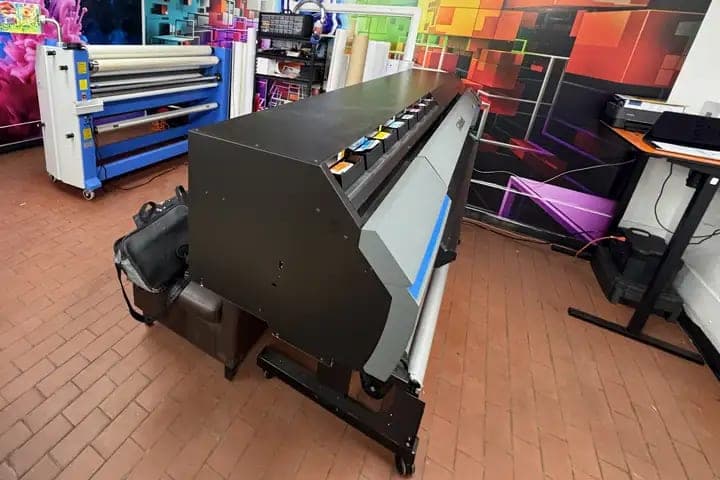
Once artwork is approved we print in-house on large-format printers, so there is no shipping delay and no outside vendor's queue. Printing a fleet's worth of panels takes a day or so depending on coverage and count. The printed film then needs time to outgas before it is laminated, and the laminate needs time to bond before the film is stretched around a corner. Skipping that cure is how a wrap lifts at the edges a month later, so we do not skip it. Plan on a couple of days between approval and film that is ready to install.
5. Vehicle prep
Each vehicle is washed, then decontaminated with a solvent wipe to remove road film, wax and any silicone from previous detailing. Old graphics come off, along with the adhesive under them. Badges, mirrors, handles and lights that sit over a panel are removed. Then the vehicle sits in the bay until the panels reach room temperature. Film applied to a cold panel does not bond the same way, and a van that spent the night outside in January can take hours to warm through.
Prep is usually a few hours for a clean van with nothing to remove. Old wrap removal can add most of a day per vehicle, more if the film has baked on for years. Tell us about existing graphics at inquiry so it is on the schedule and not a surprise.
6. Install
Install time depends on coverage and how much is going on with the panels. Typical ranges, for one installer or a pair working a standard shop day:
- Cut vinyl lettering and spot graphics: a few hours per vehicle.
- Partial wrap on a van, one or two printed panels plus lettering: about a day.
- Full wrap on a cargo van, high-roof van or box truck: one to two days.
- Buses, step vans and vehicles with heavy corrugation or rivets: longer, scoped per vehicle.
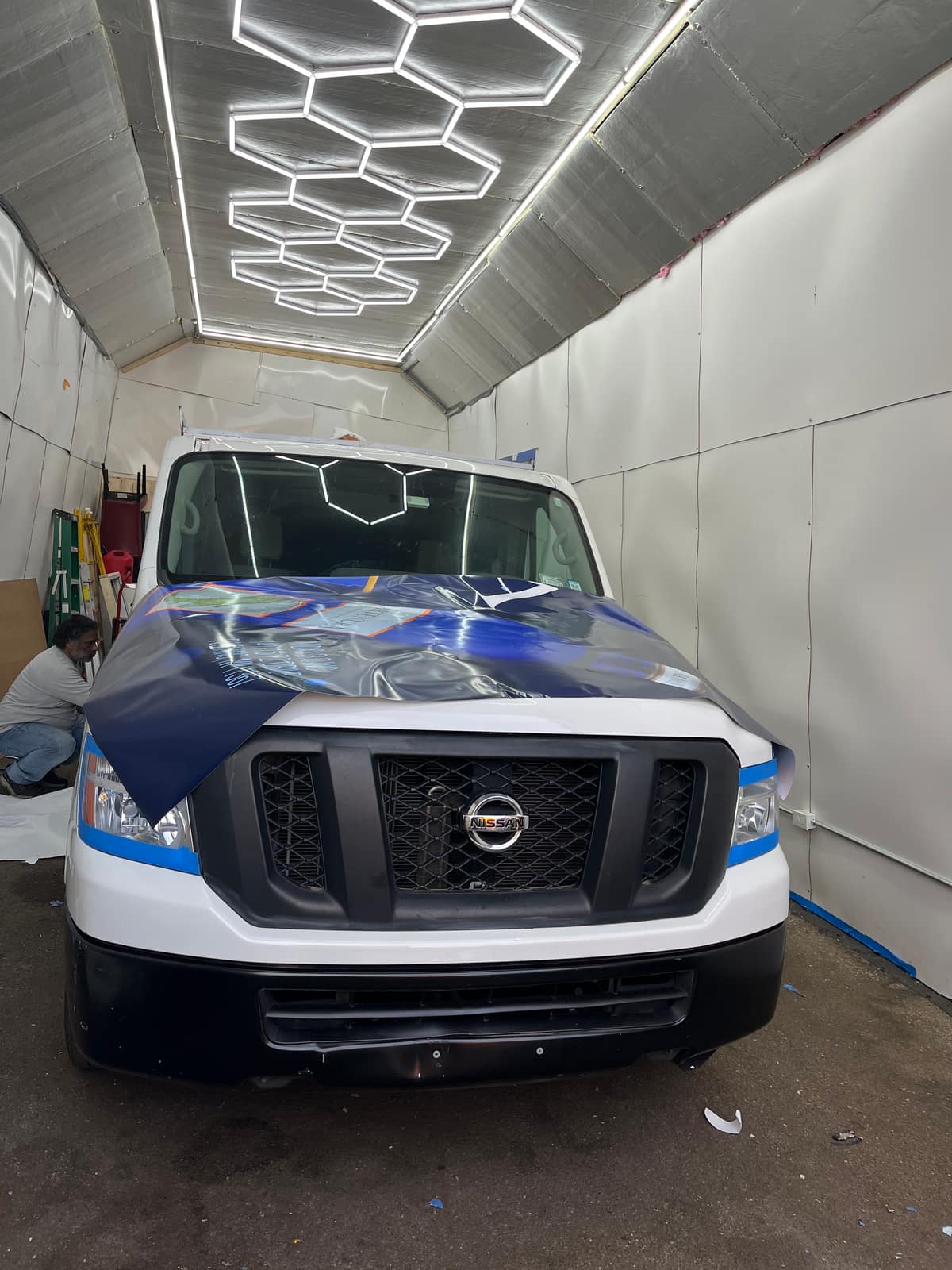
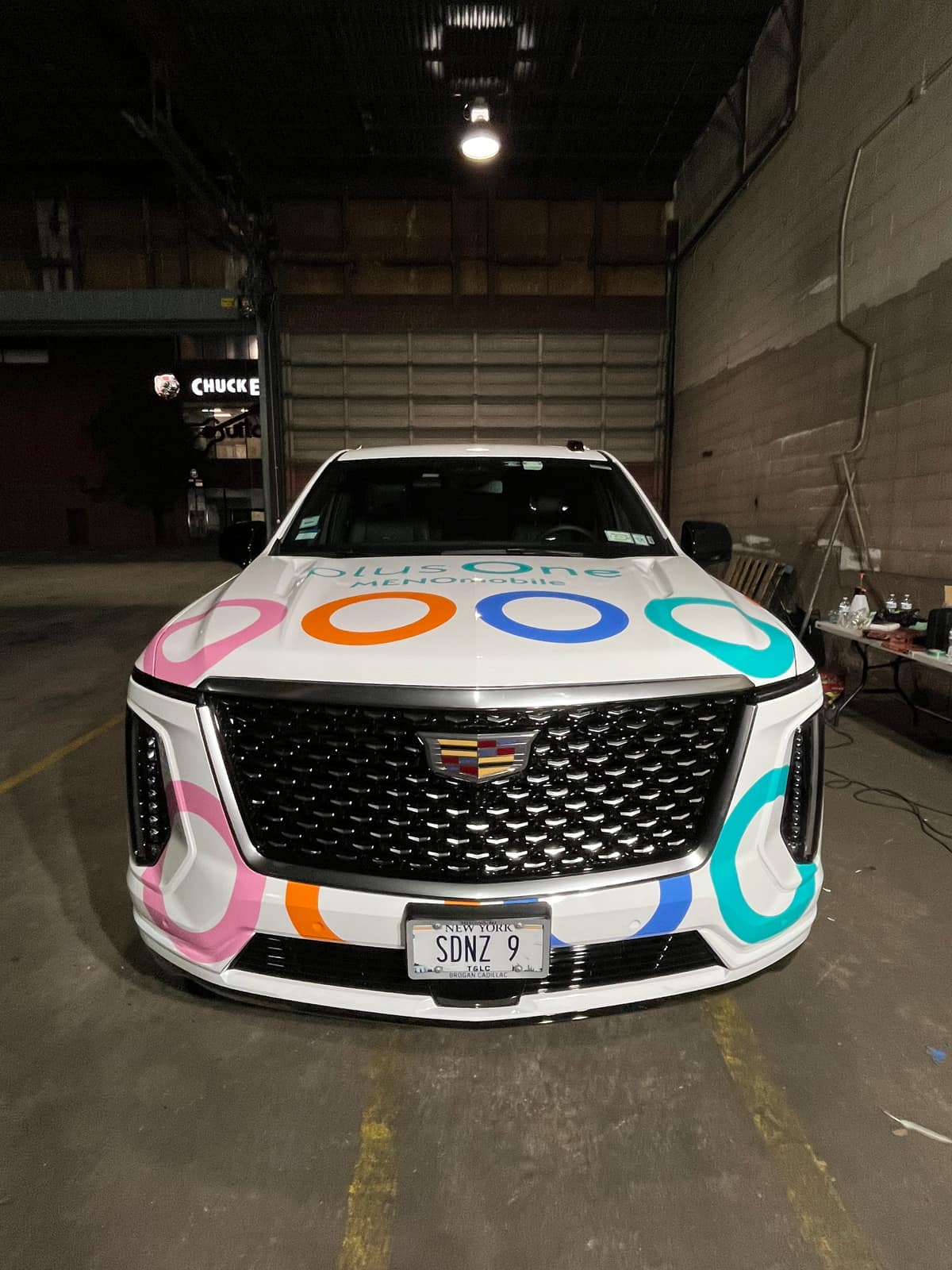
Panels go on rear to front so the seams overlap away from the wind. Each panel is laid and squeegeed out from the center, and then the detail work starts: wheel arches, door handles, mirrors, lights and every edge get cut and tucked by hand.
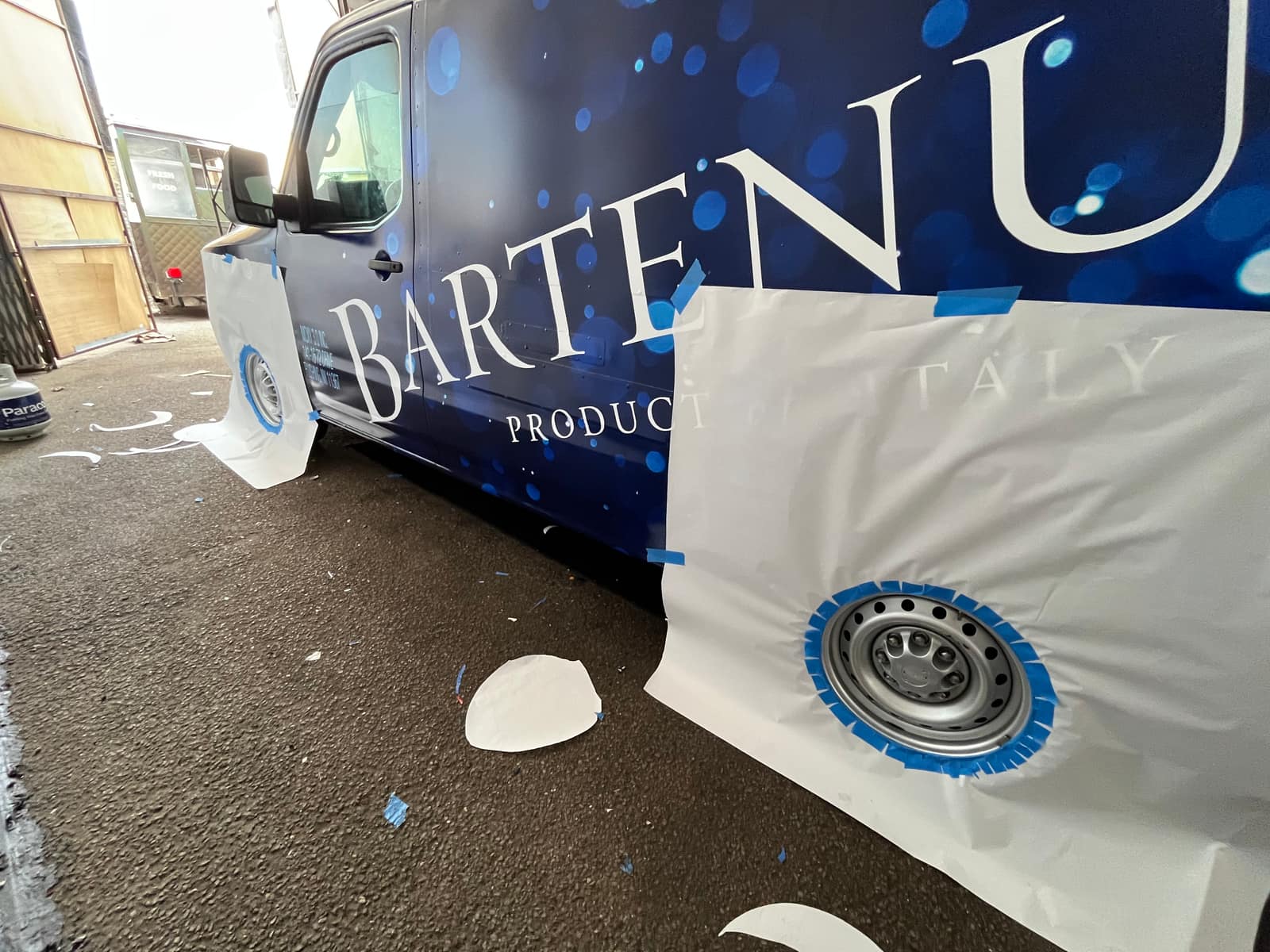
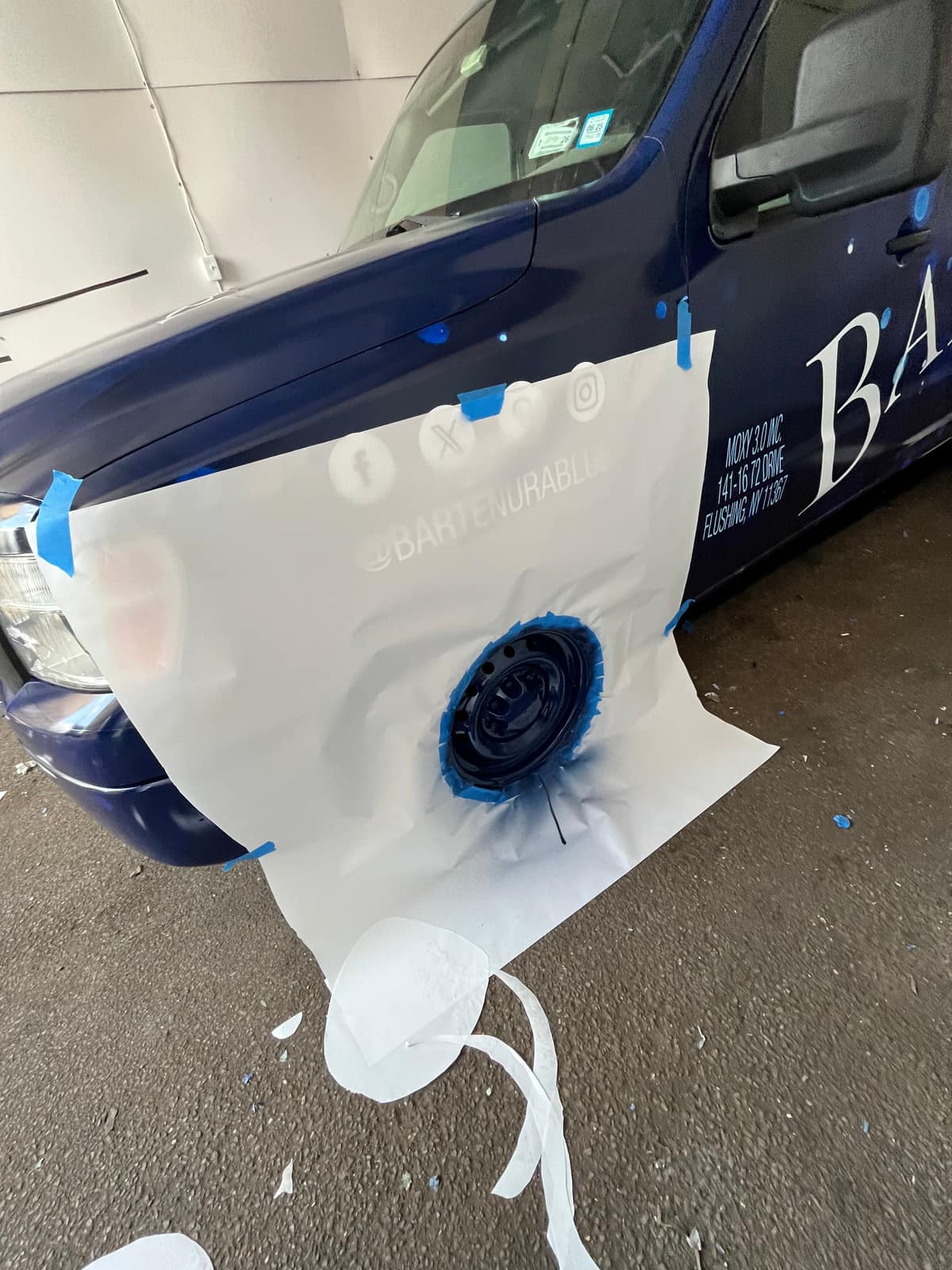
After the film is down, every edge, recess and stretched area is post-heated to a set temperature. That resets the film's memory so it stays where it was placed instead of slowly pulling back to flat. Post-heating is slow and easy to rush, and it is the difference between a wrap that holds at the edges for years and one that lifts at the mirrors by spring.
7. Inspection and handover
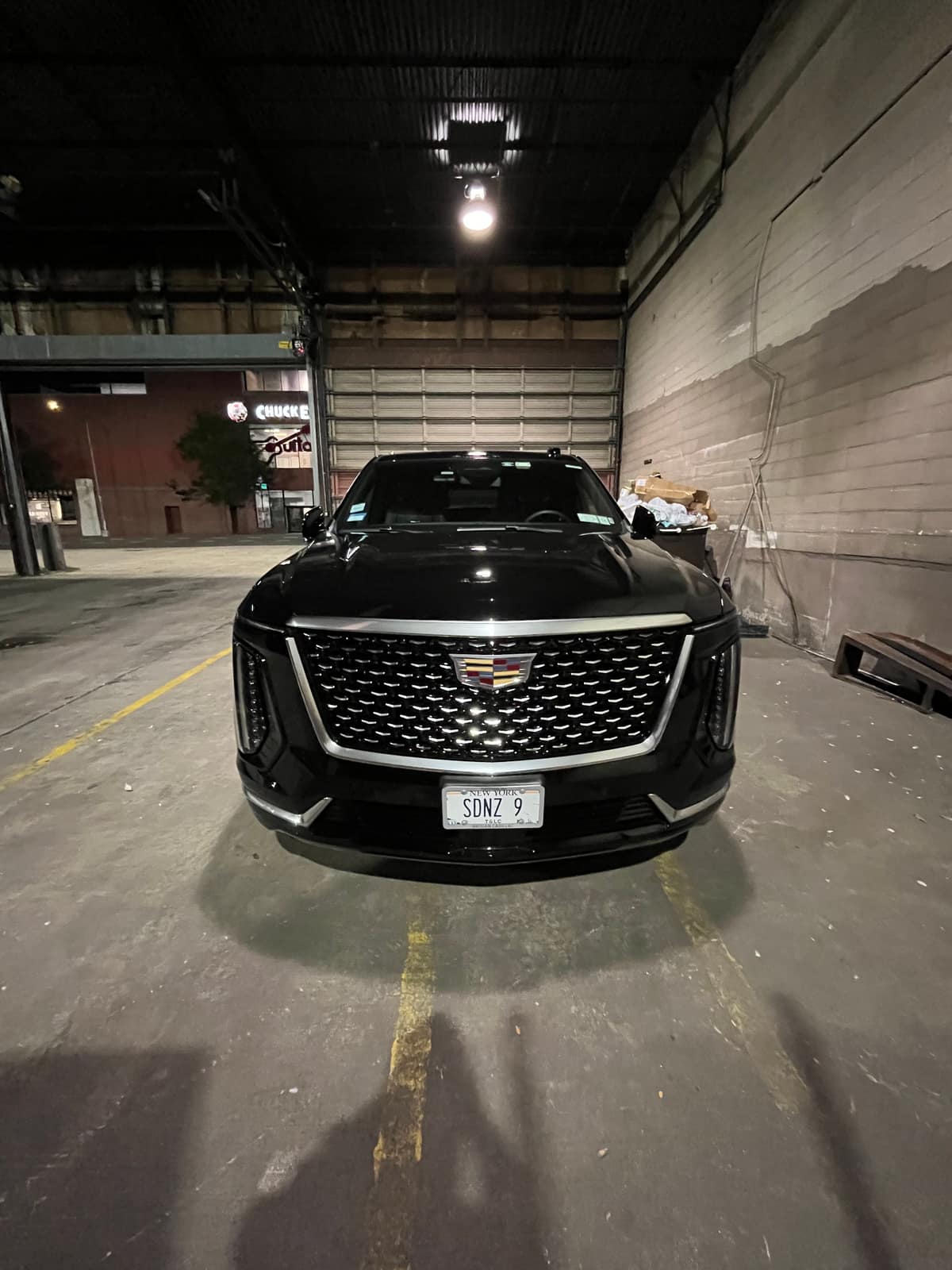
Before a vehicle leaves, it is inspected under the bay lights and again outside in daylight, where lifted edges and trapped debris show up differently. Removed parts go back on. You get a care sheet with the vehicle. The main instruction is to wait a week or so before the first wash so the adhesive finishes bonding, then hand wash or use touchless washes and keep pressure washers away from the edges. A single damaged panel on a fleet layout can usually be reprinted and replaced without redoing the vehicle.
Staging a fleet
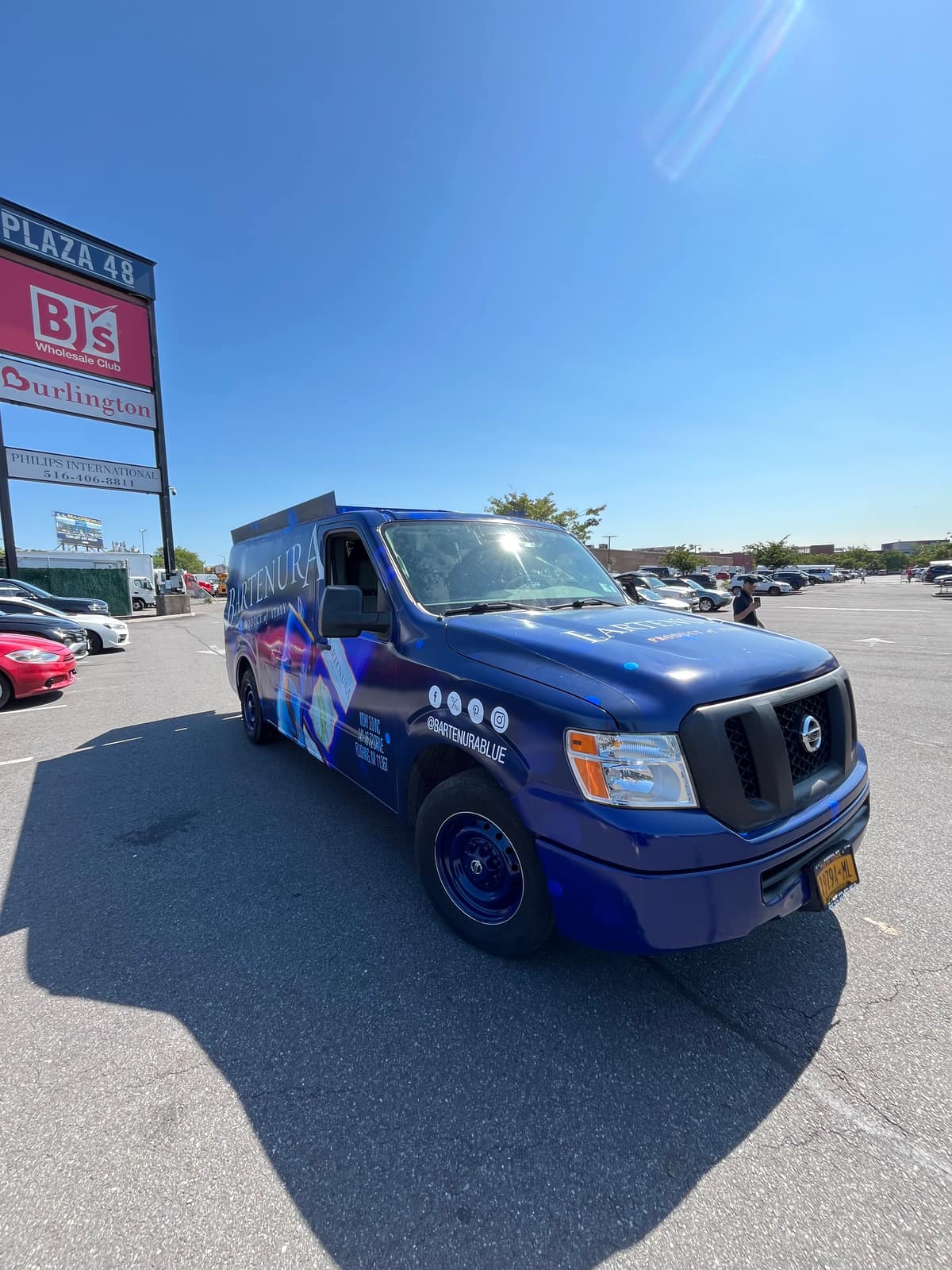
Nobody can take a whole fleet off the road at once, and we do not ask you to. A fleet is scheduled in rotations sized to the bay and your operation, usually two or three vehicles at a time. The first group takes the longest because the layout gets proven on real panels and the installer learns where every seam falls. Later groups go faster. If your vehicles have a slow day of the week, tell us and we build the rotation around it. Drop-offs can be staggered so one vehicle is prepped while the previous one is finished.
On site versus in the shop
Our bay at 4700 Northern Blvd in Long Island City is heated, lit and dust-controlled, and that is where work goes fastest. On-site installs at yards, depots and commissaries save you the trip but need covered space, power, and vehicles that are clean and staged when we arrive. Without those, on-site work runs slower and results suffer. Lettering and partial wraps travel well. Full wraps in an open lot are a harder call, and we will say so during scoping.
Seasonal factors
Cast vinyl has an application temperature window, and cold weather pushes vehicles and film out of it. In winter, on-site work often stops being practical and in-shop work needs extra time for panels to warm through. Summer has the opposite problem outdoors, where a dark panel in direct sun gets too hot and the film too soft to handle cleanly. Spring and fall are the easiest months. If you need a fleet ready for a seasonal push, start the inquiry a season ahead.
How to shorten the timeline
- 1Send a full vehicle list with the first inquiry: year, make, model, roof or box size, and counts.
- 2Send vector artwork and brand colors, not a screenshot of the logo.
- 3Name one person who can approve proofs, and give them a deadline.
- 4Decide coverage before design starts so the layout is drawn once.
- 5Tell us about old graphics, roof racks, lift gates and anything else on the panels.
- 6Bring vehicles clean, and in winter, bring them early enough to warm up.
- 7Agree the rotation up front so each group is booked before the previous one is done.
Do those and the timeline compresses to what it physically has to be: a few days of print and cure, and a day or two per vehicle in the bay. Skip them and the same job can stretch across a quarter. Either way we scope it before we schedule it.
Common questions
Can you wrap one vehicle first as a test before the rest of the fleet?+
Yes, and for a new layout we often suggest it. The first vehicle proves the template, colors and seam placement, and any change is made once before the rest are printed.
How soon can a vehicle go back to work after install?+
It can drive away the same day it is finished. Keep it out of the car wash for about a week and avoid parking it against anything that rubs on fresh edges.
Do we need to bring the vehicles to Queens?+
Not necessarily. We install on site across the five boroughs, Long Island and New Jersey when there is covered space and power. In-shop work is faster and the better choice for full wraps, especially in winter.
What if we need to change the artwork after the first few vehicles are done?+
Small changes, like a new phone number, can usually be handled as a replacement panel or a cut vinyl overlay on the finished vehicles, with the print file updated for the rest. Larger changes mean a new proof round, and we will tell you what that does to the schedule before anything is reprinted.
Next step
Let's scope your project.
Send the vehicle list and artwork status; we'll come back with a scope and timeline.